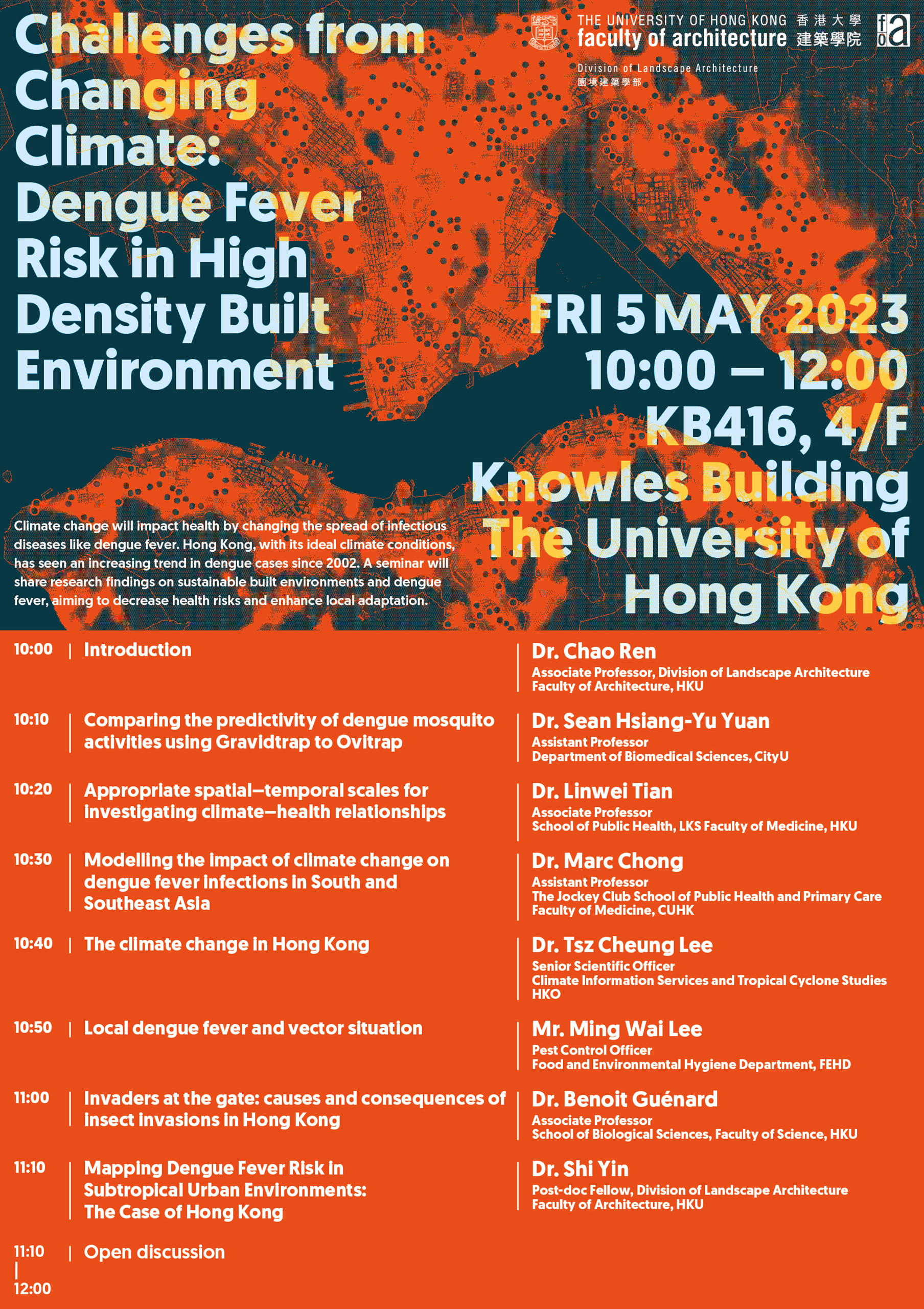
5th May 2023
Seminar: Challenges from Changing Climate, Dengue Fever Risk in High Density Built Environment
Climate change will significantly affect our health and wellbeing, not only through the impact of extreme weather events but also by changing the spread of infectious diseases. Dengue fever, the most prevalent mosquito-borne viral disease of humans, is a global health burden with over 390 million infections annually, and it is estimated to rapidly spread toward more subtropical regions due to global warming.
While dengue fever is not endemic to Hong Kong yet, given the changing climate, its hot and humid climate and high-density urban environment create ideal living conditions for the breeding of dengue vectors. Hong Kong has seen an increasing trend in dengue cases since the first local outbreak in 2002, with a historical record observed in 2018. In the post-COVID-19 era, the risk of dengue fever resurgence is foreseeable in Hong Kong due to the booming of imported dengue cases by international travelers. Moreover, Hong Kong's aging population may elevate the societal vulnerability to the dengue fever hazard, resulting in a huge public health concern during a dengue outbreak.
To address the above issues, a seminar will be held to share the latest research findings on sustainable built environments and dengue fever in Hong Kong, enhancing the understanding of local adaptation to climate change challenges and decreasing health-related risks from dengue fever and other vector-borne diseases.